Ask me any question, I'd love to hear what brought you here!
Ask a query
Explore more on Odisha Tourism...
Welcome Back!
Sign in or create your free account to unlock unlimited access.
Heritage & Architecture
Kalinga Temple Architecture
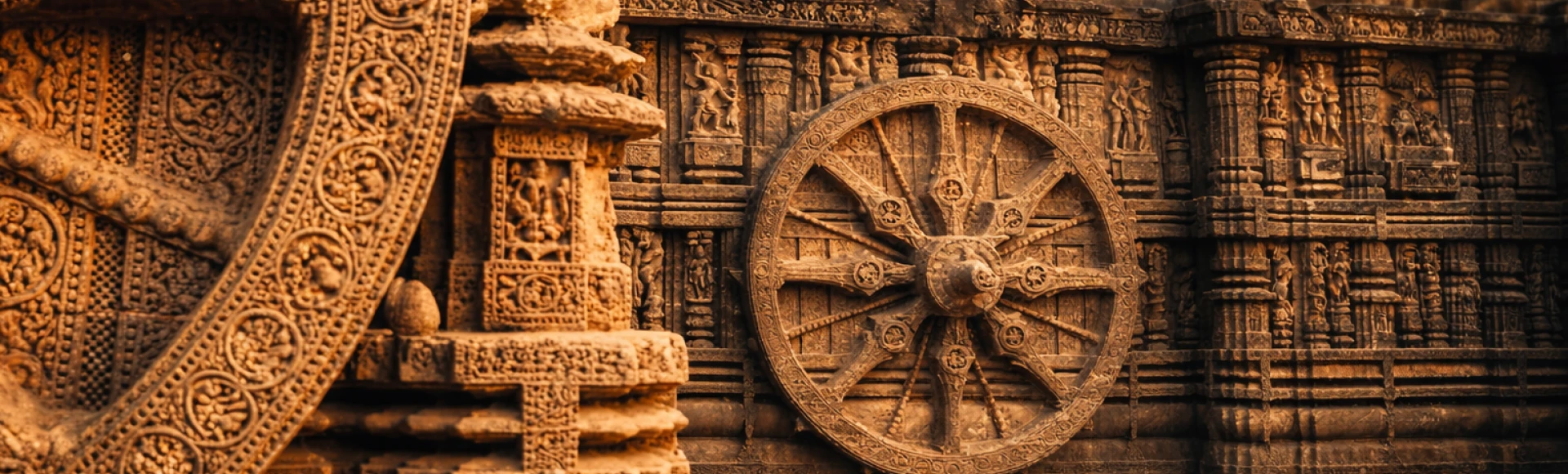
Kalinga temple architecture which flourished between the 7th and 13th centuries represents one of India’s most refined sacred design traditions. Defined by soaring curvilinear towers, intricate carvings and harmonious proportions, these temples transform stone into a powerful expression of faith.
Iconic structures such as the Sun Temple at Konark, the Jagannath Temple in Puri and the Lingaraj Temple exemplify this architectural brilliance where every detail from sculpted walls to spatial planning reflects both artistic mastery and spiritual intent.
Architectural Features
- Distinct temple style unique to Odisha
- Towering spires (Deul) and intricately carved façades
- Classical four-part structural composition
- Sculptural storytelling inspired by mythology and daily life
- Use of sacred geometry and precise alignment
Sacred & Monastic Architecture
Odisha’s architectural legacy reflects a rare confluence of spiritual traditions. From grand temples to rock-cut caves and monastic universities these spaces served not only as centres of worship but also as hubs of learning and philosophical exchange.
The Udayagiri and Khandagiri caves reveal early Jain ascetic traditions through their rock-cut forms, while the Buddhist sites of Ratnagiri, Lalitgiri and Udayagiri collectively known as the Diamond Triangle once thrived as major centres of Mahayana and Vajrayana learning, attracting scholars from across Asia.
Key Highlights
- Coexistence of Hindu, Buddhist and Jain architectural traditions
- Rock-cut caves, monasteries, stupas and meditation spaces
- Centres of ancient learning and spiritual discourse
- Archaeological remains of global significance
- Where the sacred spaces where deeply integrated with the landscape and not imposed on it.
Ancient & Medieval Monuments
Across Odisha, monuments stand as enduring records of dynasties, innovation and cultural evolution. The Sun Temple at Konark, often called the Black Pagoda, is a masterpiece of 13th-century engineering and cosmic symbolism. Similarly, Dhauli marks a historic turning point that reshaped the course of Indian and world history.
The Hathigumpha Inscription at the Udaygiri Caves is one of the most vital primary sources for ancient Indian history, providing a rare year-by-year account of a ruler’s achievements during the 1st or 2nd century BCE.
The image used is of the Hathigumpha, Udaygiri Caves and the information displayed should reflect the above historical context in the text portion.
Monument Highlights
- Globally recognised heritage landmarks
- Early inscriptions of political and spiritual significance
- Remnants of ancient forts and urban centres
- Advanced engineering and astronomical alignment
- Architectural expressions of power and devotion
Museums & Interpretation Centres
Odisha’s museums and interpretation centres offer deeper insight into its layered heritage. Housing rare manuscripts, sculptures, textiles and tribal artefacts they connect visitors with the stories behind the monuments.
Spaces such as the Odisha State Museum, Tribal Museum, Kala Bhoomi, ASI Museum at Konark and the Netaji Birthplace Museum, Kataka transform history into an engaging and accessible experience.
What You’ll Discover
- Rare artefacts and palm-leaf manuscripts
- Tribal art, textiles and craft traditions
- Sculptures preserved from heritage sites
- Curated galleries and interpretive displays
- Insights into maritime and cultural history